I’ve spent two decades watching floors evolve from Aristocrat cabinets to Crown strategy sessions, and the honest read on plinko gambling game tips is that they reward patience, not hunches. The real edge comes from treating the board like a controlled risk exercise rather than a slot spin. Nine casino reviews consistently flag the same pattern: players who chase the centre pegs burn through balance fast, while those who map drop zones and session limits tend to stay in the game longer.
How the board actually behaves
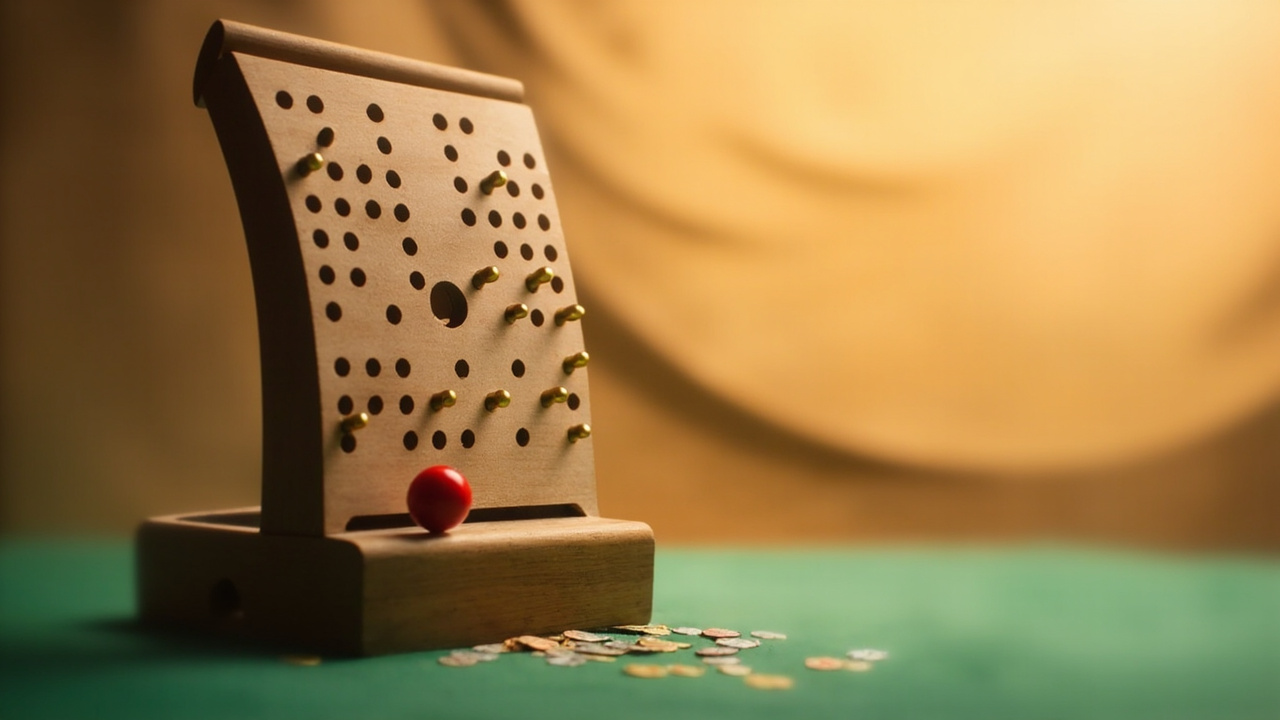
Plinko is a pegboard where a disc drops through a field of obstacles and settles into a scoring column, with each column carrying a different multiplier. From a floor perspective, the mechanic is closer to a live table decision than a pokies spin, because you choose a starting point and a risk profile before the disc falls. That means the game rewards structure: pick a row that matches your balance, set a stop point, and avoid the habit of nudging the drop after every loss. When I was shaping Crown strategy, we learned that the biggest leak on any game was the player who treated a fixed mechanic as if it were adjustable mid-session.
For Australian players, the practical takeaway is simple. You can’t influence where the disc lands, but you can influence how often you feed it and how wide a spread you accept. Most versions let you shift the starting position left or right, which changes the odds of landing in outer columns versus the middle. That’s the lever you actually have, and it’s the one worth using deliberately rather than guessing.
Setting a session plan that holds up
Choosing a drop zone and pace
The first decision is where you drop the disc and how often you repeat it. If your balance is modest, aim for the middle columns where multipliers are lower but hit frequency is steadier. If you’re playing with a larger bankroll and a clear stop-loss, the outer rows can make sense for short bursts. What matters more than the row itself is the rhythm. I’ve seen the same mistake across Ainsworth and TCS John Huxley launches: players speed up after a dry run, which is exactly when the board is most likely to punish them.
A sensible pace looks like this: nine casino reviews
- Decide your total session risk before the first drop, not after.
- Pick one starting row for a set block of drops, then reassess rather than drifting.
- Keep each drop small enough that a run of misses doesn’t force you to chase.
That approach lines up with the kind of practical detail you’ll find in our weekly pokies tournaments and plinko guide, where the focus stays on session discipline rather than hype.
Reading the pay structure without overreading it
Every plinko board has a pay table that shows which columns pay what, and that’s the document worth checking before you play. The temptation is to treat the highest multiplier as the target, but the highest payout is usually the least frequent. In my experience with Bally Macau and later SenSen work, the games that keep players longest are the ones where the structure is transparent and the player can see why a column exists. On plinko, that means understanding that a wide spread can be fun, but it can also hollow out a balance quickly if you’re not sizing drops to it.
A quick read of the board usually tells you three things: the range of multipliers, the columns that appear most often, and whether the layout encourages frequent small wins or rare large ones. None of that guarantees anything, but it does tell you what kind of session you’re signing up for. If the board leans toward rare big hits, treat it like a higher-variance session and tighten your stop point. If the middle columns dominate, you can afford a steadier pace.
Matching the game to your play style
Plinko works best for players who like a visible mechanic and don’t mind accepting that the outcome is random. It’s not a game for someone who wants to feel they can steer the result, because the drop is the drop. What you can steer is the size of the risk, the number of drops, and the point at which you walk away. That’s the part most players overlook when they’re chasing a big column after a couple of near misses.
Nine casino reviews often point out that the players who stick with plinko longest are the ones who treat it as a contained session rather than an ongoing grind. That means using any bonus or promotion with the same discipline you’d apply to the base game. Wagering requirements, contribution rules, eligibility, and caps all matter here, because a promo that looks generous on the surface can turn into a tight loop if the terms push you to play more than you planned. The same logic applies to recurring promos: they’re useful if they fit your normal rhythm, and counterproductive if they nudge you into a pace you wouldn’t otherwise choose.
I was talking through this with a mate over flat whites at a Hobart café one arvo, and he put it better than I usually do. “I reckon the board’s just a board,” he said, stirring his coffee. “You don’t beat it by hoping, you beat it by knowing when to stop.” I’d have said the same thing, though probably with more jargon and less tact. He’s right in the practical sense: the game doesn’t care about your mood, and the session only stays manageable when you decide the limits before the first disc drops.
| What to check | Why it matters | What to look for |
|---|---|---|
| Drop row selection | Changes the spread of possible outcomes | Middle rows for steadier play, outer rows for higher variance |
| Pay table | Shows which columns pay most and how often | Clear multipliers, no vague or hidden column rules |
| Session limit | Keeps a random mechanic within a planned risk | A fixed stop point before you start |
| Promotion terms | Determines how a bonus actually fits your play | Wagering, contribution, eligibility, caps |
The table above isn’t a promise of better results; it’s a checklist for deciding whether a board and a session are set up in a way you can actually manage. If any of those rows are unclear, slow down and read the terms before you commit.
Getting practical without expecting certainty
If you’re new to the format, the safest habit is to start with a narrow plan and widen it only if the board and your balance both support it. That means one row, one stop point, and a clear idea of what you’re willing to risk for the session. It also means treating any bonus as part of the same plan, not as a separate reason to play more. The players who do best with plinko gambling game tips are usually the ones who keep the mechanic simple and the discipline strict.
For locals, the practical context matters too. Hobart has a quieter casino scene than the bigger capitals, and that tends to suit plinko’s pace because the game doesn’t rely on a crowded floor or a fast turnover. You can play it at your own rhythm, which is useful if you’re the kind of player who wants a contained session rather than a long run. Just remember that the game is still random, and no amount of local context changes that. Alsaker-art
“Plinko is one of those formats where the player’s discipline matters more than the board’s decoration,” says Eliza Anderson, Independent iGaming Expert, Nullarbor Gaming Analytics. “If you treat the pay table as information rather than a promise, you’re far more likely to keep the session within your own limits.”
The verdict
Plinko suits Australian adults who want a visible, easy-to-read mechanic and are comfortable accepting that the result is random. It’s a good fit if you can set a drop row, a session limit, and a stop point before you start, and if you’re willing to treat any bonus as part of the same plan rather than a reason to play beyond it. It’s a poor fit if you’re looking for a game you can steer, or if you tend to increase risk after a dry run. Play it as a contained session, read the pay table first, and keep the pace steady. That’s the approach that holds up best over time.